
The four IA elements
The framework comes from a thematic analysis of 42 papers on sensemaking and interactive systems. Each element names something people already do when they make sense of information, and each maps to a concrete UI decision.
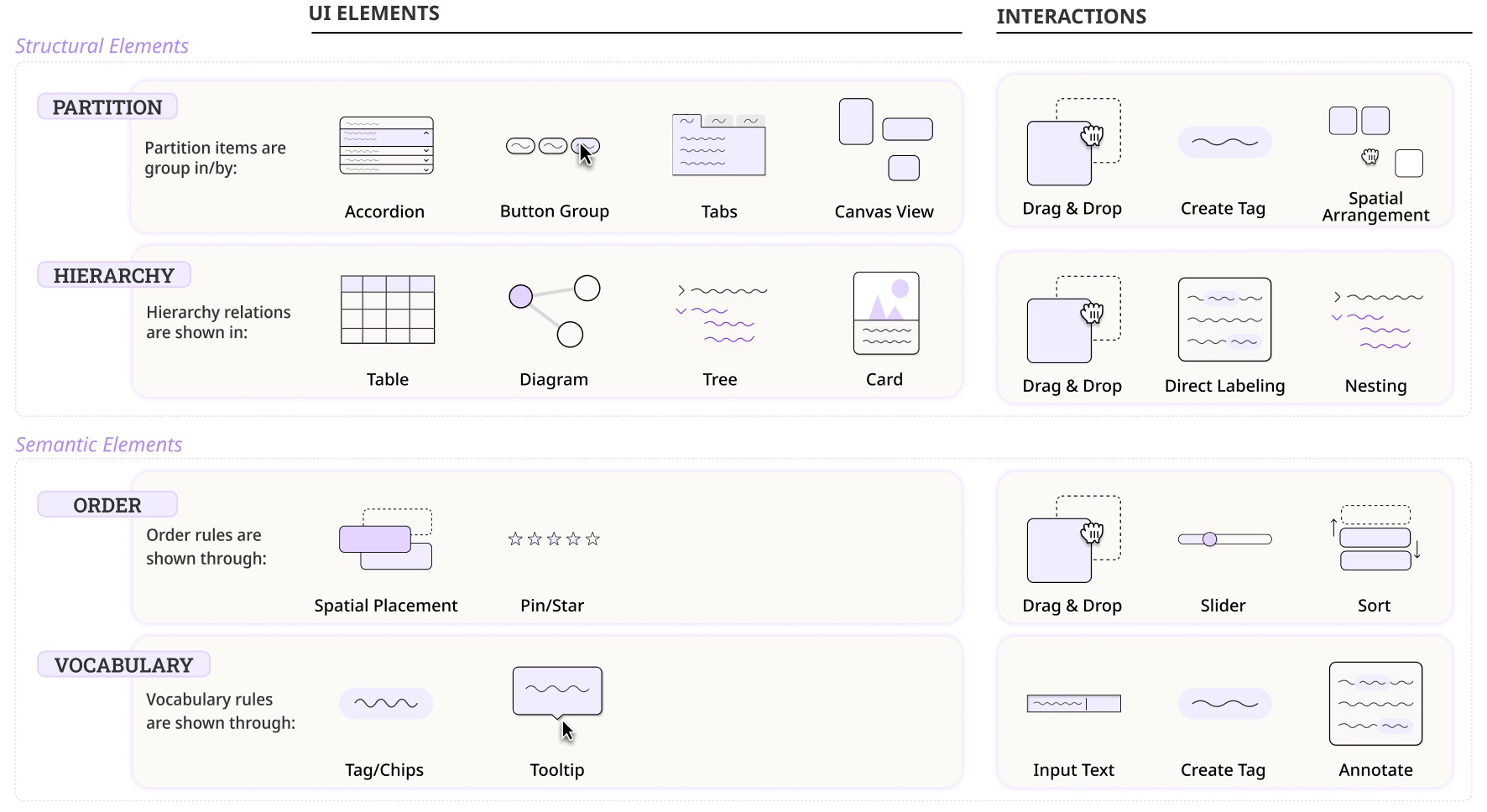
Structural elements (Partition Hierarchy) describe how information is organized. Semantic elements (Order Vocabulary) describe the meaning and priorities you bring to it.
| Element | Definition | Example | Shown as | Created by |
|---|---|---|---|---|
| Partition | Items grouped because they are similar or related. Members are lateral peers. | Listings in Downtown, Midtown, Uptown | Tabs, kanban columns, accordions, color groups | Dragging an item between groups |
| Hierarchy | Items with differentiated roles relative to one another. | Price, commute, and safety under each apartment | Table columns, trees, nested cards | Adding or removing a field |
| Order | Sequence or weight based on what matters more to you. | Proximity to work > pet-friendly > parking | Sorted and ranked lists, pins, stars | Sorting, reordering, starring |
| Vocabulary | Personal terms with a task-specific meaning. | Affordable = under $1,800 a month | Headers, labels, tags, tooltips | Renaming a label, defining a term |
How the elements shape generation
Maru's Layout Engine builds each interface in two steps:
- Plan the layout with Partition and Hierarchy. Groups and fields set the skeleton, such as kanban columns for groups or table columns for fields.
- Fill the layout with all four. Vocabulary sets the labels, and Order decides what comes first. Lower-priority items move down but are never removed.
Persistence
IA rules reflect what you build over a whole task, so they persist: each rule carries forward to new generations, and you can add or drop it at any time.
The four elements come from sensemaking work. Other activities, such as writing or data analysis, may need different elements; we offer these four as a starting point.